Best Time to Kayak Condado Lagoon: A Month-by-Month Guide
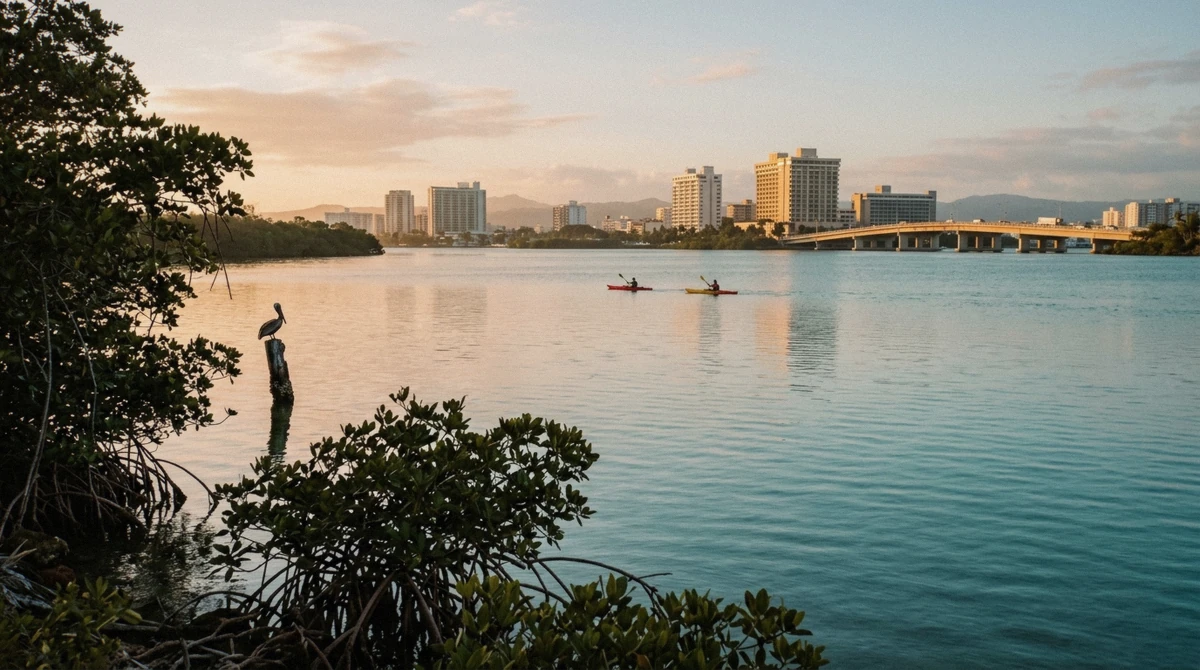
The best time to kayak Condado Lagoon is a February or March morning, combining San Juan's driest weather with calm mornings before any afternoon chop builds. December through mid-April run a close second, still dry season and comfortably warm, with hurricane season not yet in play. Plan around November if a dry morning matters most, since it is the wettest month on record at 6.18 inches of rain on average. This guide works through the lagoon month by month, names the best time of day to launch, and covers what actually happens to a booking when the weather turns.
Quick answer
February and March are the best months to paddle the Condado Lagoon, with the lightest rainfall and the calmest mornings of the year. Plan around November if a dry morning matters most, since it is the wettest month on record at 6.18 inches of rain.
Key takeaways
- February and March post San Juan's lowest rainfall totals on NOAA's climate normals, making them the most reliable weeks for a dry morning paddle.
- December through April is the reliable runner-up window, still dry season, though the water bike tour fills its early slots fastest during the U.S. winter holiday weeks.
- November is the wettest month at 6.18 inches of rain on average, the one stretch of the year worth planning around if a clear morning matters most.
- The lagoon sits fully sheltered with no ocean swell, so the winter swell that pounds Condado's Atlantic beaches never reaches this water, whatever the season.
- Early morning beats every other slot: the water is calmest before the wind and the midday crowd arrive, which is also when the daytime water bike tour departures go first.
- Night paddles like the glow kayak and salsa tour start later in winter than in summer, following the season's earlier sunset.
Which Slot Suits Your Trip
If you came for the wildlife
take the first morning slot of the day, when the water is flattest and the lagoon is quiet. What tends to show up is in what lives in the Condado Lagoon.
If you are travelling between June and November
book a morning and keep a flexible cancellation, since the afternoon is when squalls and hurricane-season weather usually arrive.
If you only have an evening free
take the glow kayak and salsa evening or the LED clear kayak night paddle, and check the sunset time for your month before you pick a start.
If you are bringing children
aim for the calm early slot rather than a late one, and read kayaking the lagoon with kids for the age policies.
The Short Answer on Time of Day
If you can only pick one thing to get right, pick the hour, not the month. Operators and repeat paddlers on the lagoon agree on this without much debate: the water is calmest and the light is best early in the morning, before the wind picks up and before the crowd at Jaime Benítez Park builds. By midday the lagoon fills with rentals and tours launching back to back, and by mid-afternoon a light chop typically develops as the trade winds strengthen.
None of that turns the lagoon rough, this is a reserve where motorboats are banned and the water stays flat almost all the time, but an early start still buys you quieter water and a better shot at wildlife before other paddles stir the shallows.
That said, this is not a place where the month you choose overrides everything else. San Juan runs warm and paddle-friendly nearly year round, so the real decision is less about which month to book and more about which hour, and how much rain you are willing to plan around. For day and night paddles on the Condado Lagoon, morning slots for wildlife viewing and evening slots for the LED night tours both have a clear reason behind the timing, covered section by section below.
Month by Month on the Lagoon
San Juan does not have a true off-season the way colder destinations do. Temperatures stay warm year round and the sea stays swimmable in every month, so the real variables paddlers should track are rainfall and hurricane risk, not temperature. The table below uses NOAA's 1991 to 2020 climate normals for San Juan; treat every figure as a typical value for the month, not a guarantee for any single day.
| Month | Avg high | Avg low | Precipitation |
|---|---|---|---|
| January | 82°F | 71°F | 3.03 in |
| February | 83°F | 71°F | 2.28 in |
| March | 83°F | 72°F | 2.13 in |
| April | 85°F | 73°F | 3.70 in |
| May | 86°F | 75°F | 5.28 in |
| June | 88°F | 77°F | 3.50 in |
| July | 87°F | 77°F | 4.17 in |
| August | 88°F | 77°F | 5.24 in |
| September | 88°F | 76°F | 5.59 in |
| October | 87°F | 76°F | 5.08 in |
| November | 85°F | 74°F | 6.18 in |
| December | 83°F | 72°F | 4.57 in |
Read it this way: February and March are the driest stretch of the year, both under two and a half inches of average rainfall, while November is the wettest at 6.18 inches, with September close behind at 5.59 inches. Average highs climb gently from 82°F in January to a peak of 88°F in June, August and September, and average lows barely move, staying in the low to mid seventies nearly all year. Sea temperature off San Juan runs roughly 77 to 84°F through the year, warmest around September, so no wetsuit is ever needed on the lagoon, whatever month you paddle.
Hurricane Season and What It Means for a Booking
The Atlantic hurricane season runs from June 1 to November 30, with the National Hurricane Center's own data showing peak activity from August through October. That does not mean the lagoon is unpaddleable for six months. Most days inside that window are ordinary San Juan weather, warm with a passing shower, and the reserve's sheltered water means a routine afternoon squall rarely does more than delay a launch by an hour.
The exception is a named storm or tropical system tracking toward Puerto Rico, which is the scenario that actually cancels a booking, not the general season.
If your dates fall inside hurricane season, the practical move is to watch the National Hurricane Center's forecast in the week before your trip and to read your operator's own cancellation terms before you book, since policies differ by listing. Outside of an active storm track, paddling anywhere from June through November on the Condado Lagoon is routine, just with slightly higher odds of a rain delay than in the dry months of February and March.
Morning, Afternoon, Sunset or After Dark
Every slot on the lagoon has a different personality. The table below lines up the four windows paddlers actually choose between, and what each one is genuinely best for.
| Time of day | Conditions | Best for |
|---|---|---|
| Early morning | Calmest water of the day, softest light, fewer boats out | Wildlife viewing, photos, first-timers who want the easiest conditions |
| Midday | Warmest, brightest, and the busiest stretch of the day | Travelers on a fixed schedule who can only paddle around lunch |
| Late afternoon | Wind and light chop typically build as the day goes on | Still manageable, just expect more movement on the water than morning |
| Sunset to after dark | Cooling air, the San Juan skyline lit up, LED night kayaks come out | Night tours like the glow kayak and salsa outing or a clear kayak skyline paddle |
Sunset itself moves with the season, and night departures are timed around it. In mid-December the sun sets around 5:37 pm, so winter night paddles start noticeably earlier in the evening than summer ones, when sunset runs closer to 7:00 pm in mid-June. A night booking made in January should expect an earlier meeting time than the same tour booked in July.
For the LED-lit after-dark experience itself, including what it actually looks like versus a natural bioluminescent bay, see our honest breakdown of whether Condado Lagoon glows.
What the Weather Actually Cancels
What usually does not cancel a paddle
A passing shower, a grey sky, or an ordinary humid afternoon rarely stops a tour on the lagoon. The water stays warm, there is no swell to speak of inside the reserve, and light rain on a protected estuary is a very different thing from rain on open ocean. Plenty of paddlers get wet from a five-minute shower and keep going without noticing much difference.
What does
Lightning is the hard stop. Any operator running trips on open water will pause or cancel the moment lightning is in the area, since a kayak on flat water is an exposed place to be during an electrical storm. Sustained strong wind and an active tropical system tracking toward Puerto Rico are the other real triggers.
None of these are common outside the August to October peak of hurricane season, but they are the actual reasons a booking gets rescheduled, not rain on its own.
If your operator calls off a trip for weather, the standard practice on the lagoon is a rescheduled slot or a refund, though exact terms vary by listing, so it is worth reading the cancellation policy on your specific booking before you pay.
It is also worth separating two different questions travelers tend to blur together: can you paddle a sheltered lagoon during hurricane season, and can you count on any single day of a multi-week trip being dry. The answer to the first is generally yes, since the reserve's calm water rarely resembles the open-ocean conditions that actually shut down coastal activities elsewhere on the island. The answer to the second is closer to a coin flip in September, October or November, simply because those months carry the year's heaviest rainfall totals.
Building one flexible morning into your itinerary, rather than a single fixed slot, is the simplest way to hedge against a rained-out plan during the wetter half of the year.
Booking Timing and Crowds
Jaime Benítez Park gets genuinely busy on weekends and around midday, when rentals, guided tours and independent paddlers are all launching from the same stretch of shore at once. Morning slots are the ones that fill first, especially the ones built around wildlife viewing, since paddlers chasing a manatee or ray sighting already know the water is calmest and clearest before the lagoon wakes up. If a specific morning slot matters to you, particularly on a weekend, book it a few days ahead rather than showing up and hoping.
Evenings follow a different rhythm. Night tours such as the glow kayak and salsa experience and the LED clear kayak paddles draw their own crowd once the sun goes down, and those slots run on a fixed schedule tied to sunset rather than to how busy the park is. Either way, arriving with your date already booked beats trying to find an open slot on the spot, especially in the December through April stretch when both the dry weather and the U.S. winter travel season overlap.
None of this is a reason to overthink your dates. San Juan's warm water, sheltered lagoon and short showers mean almost any morning here works, and the choice between February's dry calm and August's warmer, wetter water is really a choice between two good options, not a good month and a bad one. Pick a morning departure, check the forecast a day or two out, and let the rest sort itself on the water.
Frequently Asked Questions
What is the best time of day to kayak the Condado Lagoon?
Early morning. The water is calmest and clearest before the wind and the midday crowd build, which is also when morning departures on the daytime water bike tour fill first.
What is the best month to kayak in San Juan?
February and March, San Juan's driest months on NOAA's climate normals, both averaging under two and a half inches of rain. December through April is a solid runner-up, still dry season and comfortably warm.
Can you kayak the Condado Lagoon during hurricane season?
Yes, most days. Hurricane season runs June 1 to November 30 with peak activity from August through October, but ordinary days inside that window are routine San Juan weather. Watch the National Hurricane Center's forecast close to your dates and check your operator's cancellation policy.
Is it too hot to kayak in San Juan in summer?
No. Average highs top out around 88°F in June, August and September, warm but manageable on open water with sun protection, water and an early start. Sea temperature stays a comfortable 77 to 84°F year round.
Do kayak tours run in the rain?
Usually, yes, for an ordinary passing shower. Lightning, strong sustained wind and an active tropical system are the real triggers for a cancellation, not light rain on its own.
What time do night kayak tours start?
It moves with sunset. Around 5:37 pm in mid-December versus roughly 7:00 pm in mid-June, so a night tour like the glow kayak and salsa experience or the $69 LED clear kayak night paddle starts noticeably earlier in winter than in summer.