Is the Condado Lagoon Bioluminescent?
Is Condado Lagoon bioluminescent? No, it is not one of Puerto Rico's bioluminescent bays. The glow you see on a Condado night kayak tour comes from LED lights mounted under a clear hull, not from the dinoflagellates that make Mosquito Bay, Laguna Grande and La Parguera glow on their own. That does not make a Condado night paddle a lesser trip, it makes it a different one: a lit-up glide across a protected estuary with the San Juan skyline overhead, right in the city, no hour-long drive required. This guide sorts the real bioluminescence from the LED version, names where the three genuine bio bays actually are, and tells you honestly which night trip fits what you are actually chasing.
Quick answer
No, the Condado Lagoon is not bioluminescent. Puerto Rico's three real bioluminescent bays are Mosquito Bay in Vieques, Laguna Grande in Fajardo and La Parguera in Lajas, and Condado is not one of them. The lagoon's night kayak tours glow because of LED units built into the clear-bottom kayaks, not because of the dinoflagellates that light up a true bio bay.
Key takeaways
- Condado Lagoon's night glow comes from LED lights under the kayak hull, not natural bioluminescence.
- Puerto Rico's three real bio bays are Mosquito Bay (Vieques), Laguna Grande (Fajardo) and La Parguera (Lajas).
- Mosquito Bay was recognized by Guinness World Records in 2006 as the brightest bio bay in the world.
- The closest real bio bay, Laguna Grande, is about an hour's drive east of San Juan.
- Want the LED version anyway, with the skyline as the backdrop? see the LED clear kayak night tour from $69.
- Comparing your night options first? see every night paddle on the Condado Lagoon laid out side by side.
The Short Answer
The Condado Lagoon does not glow on its own. It is not listed among Puerto Rico's bioluminescent bays, and no natural bioluminescence display exists there. What operators call a "glow kayak" tour on the Condado Lagoon is an LED-lit night paddle through a protected estuary in the middle of San Juan, not a bio bay experience.
That distinction matters because some operator listings and travel articles use loose language, calling the LED trips "bioluminescent" or "glowing" without clarifying the source of the light. This site takes the honest position: Condado is a beautiful, easy, LED-lit night paddle with the city skyline overhead, and anyone whose whole reason for going is to see natural bioluminescence should plan a trip to one of the three real bays instead. Faint natural plankton flashes are sometimes reported in warm Caribbean water generally, but they are not the attraction on a Condado night tour and should never be expected or promised.
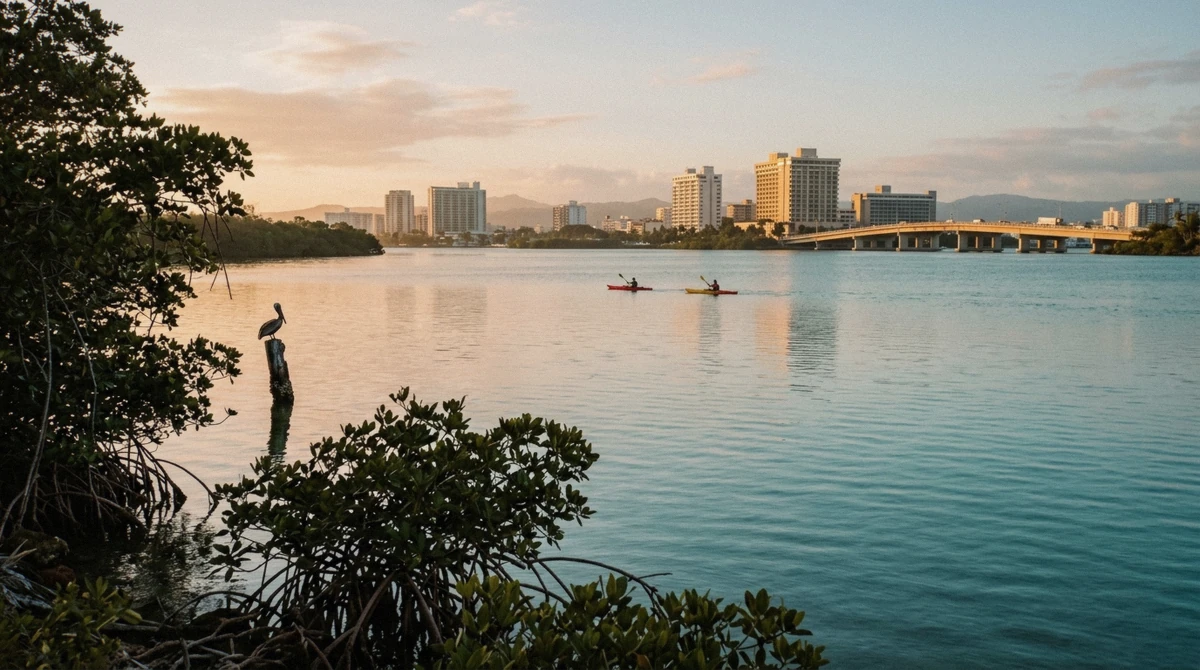
The two experiences also feel different on the water, beyond just the light source. A bio bay trip happens in genuine darkness, away from any city glow, with the plankton's flash as the only light beyond starlight. A Condado night paddle keeps the skyline in view the whole time, hotel towers, streetlights and the Puente Dos Hermanos bridge lit up along the shore, which is part of the draw for visitors who want a night on the water without leaving the city behind entirely.
What Actually Makes the Condado Lagoon Glow at Night
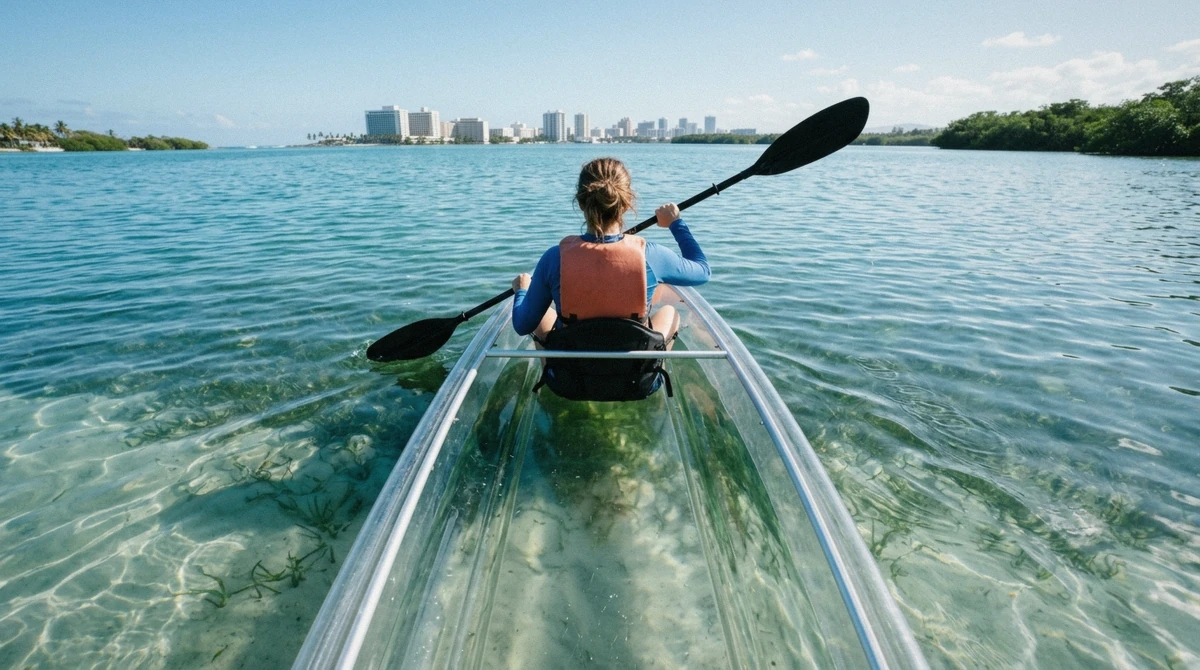
The glow on a Condado night kayak comes from two sources, both artificial. LED units are built into the clear, transparent hull of the kayak itself, lighting the water directly beneath and around the boat as you paddle. The second source is the San Juan skyline, the lit hotel towers and streetlights along Ashford Avenue reflecting off the flat, sheltered surface of the lagoon.
The lagoon being sheltered on all sides, with no ocean swell reaching it, is exactly what makes the LED lighting so effective at night: the water stays calm enough for the reflections and the underwater glow to actually show, rather than breaking up in chop the way it would on open water.
That same shelter is why the lagoon is open to night paddling at all. Motorized vessels are banned across the reserve, so there is no boat wake or motor noise crossing the water after dark, just the paddle strokes of whichever group is out that night and the quiet hum of the LED units themselves.
Puerto Rico's Three Real Bioluminescent Bays
Puerto Rico has exactly three recognized bioluminescent bays, and the Condado Lagoon is not one of them.
| Bay | Location | Swimming allowed? | Notable fact |
|---|---|---|---|
| Mosquito Bay | Vieques | No | Recognized by Guinness World Records in 2006 as the brightest bio bay in the world |
| Laguna Grande | Fajardo | No | The closest of the three to San Juan, about an hour's drive |
| La Parguera | Lajas | Yes | The only one of the three where swimming is permitted |
In all three, the light comes from dinoflagellates, single-celled plankton that flash blue-green when the water around them is disturbed, by a paddle stroke, a fish, or a swimmer's movement. That is real bioluminescence, produced by living organisms, and it is a completely different phenomenon from the LED lighting used on Condado's night kayak tours.
Why Some Listings Still Call It Bioluminescent
Part of the confusion is marketing shorthand. "Glow kayak" is a catchy phrase, and some operator listings and travel articles borrow the word bioluminescent because it is more familiar to readers than explaining an LED lighting rig. It is not usually meant to deceive, but it is loose language, and it sets the wrong expectation for anyone who books a Condado night tour specifically hoping to see the natural phenomenon.
The other source of confusion is geography. Visitors researching a Puerto Rico trip often read about Mosquito Bay or Laguna Grande first, then search for a night kayak option closer to their San Juan hotel and land on Condado's listings, which use similar-sounding language for a very different light source. Reading the fine print on any "glow" or "bioluminescent" listing in San Juan itself, rather than in Fajardo, Lajas or Vieques, is the simplest way to avoid the mix-up before you book.
LED Night Paddle in Condado, or a Real Bio Bay Trip
Condado Lagoon LED night kayak
- Right in San Juan, no drive required beyond a short taxi
- The San Juan skyline as the backdrop, not open ocean darkness
- LED lighting under the hull, consistent every night regardless of moon phase
- From $69 for the LED clear kayak version, $77 for the skyline route
A real bioluminescent bay
- Natural dinoflagellate glow, produced by the water itself
- Best on a dark, moonless night, since moonlight washes out the effect
- About an hour's drive to Laguna Grande, or roughly two and a half hours to La Parguera
- Swimming only allowed at La Parguera; Mosquito Bay and Laguna Grande are paddle-only
Verdict Neither trip is a lesser version of the other, they are different experiences. Condado's LED paddle is the convenient, in-city option with a skyline view; a real bio bay is the trip for natural bioluminescence itself, and it takes real travel time to reach one from San Juan.
Which Night Tour to Book in Condado, and Why
If you have accepted that Condado is an LED experience rather than a natural one, and you still want a night paddle without leaving San Juan, there are a few honest ways to pick between the options on this site.
| Tour | Price | Duration | Best for |
|---|---|---|---|
| LED clear kayak night tour | $69 | 1 hour | First-time night paddlers who want the classic LED-lit glide |
| Night clear kayak skyline tour | $77 | 1 hour | Photographers and couples who want the best skyline sightlines |
| Glow kayak & beach salsa experience | $67 | 2 hours | Groups who want the paddle plus a shore experience afterward |
The LED clear kayak night tour is the straightforward pick if this is your first Condado night paddle. The night clear kayak skyline tour leans harder into the city view, routing closer to the hotel towers along Ashford Avenue. The glow kayak and beach salsa tour is the longest of the three at two hours and adds a beach stop, which suits a group that wants the night out to continue past the water.
Last verified: August 2026.
All three depart after sunset, and how early that is depends on the month. Sunset in San Juan runs around 5:37 pm in mid-December and about 6:52 pm in mid-January, versus roughly 7:00 pm in mid-June, so a winter night tour starts noticeably earlier in the evening than a summer one covering the same route. None of the three rely on moon phase or season for their light, since the glow comes from the LED units rather than natural conditions, which is one genuine advantage over booking a bio bay trip around a moonless night.
How to Get to a Real Bio Bay From San Juan
If natural bioluminescence is the actual goal, the trip has to leave San Juan. Laguna Grande, in Fajardo, is the closest option at roughly an hour's drive east, which makes it the realistic choice for visitors who only have one evening free outside the city. La Parguera, on the southwest coast in Lajas, is about two and a half hours from San Juan, a longer haul but the only one of the three bays where you can actually swim in the glow.
Mosquito Bay, on the island of Vieques, requires a ferry or short flight in addition to the drive to the departure point, making it the trip that needs the most advance planning of the three.
All three bays are darkest, and therefore brightest with plankton glow, on a moonless night, so trip timing around the lunar calendar matters more for a real bio bay than it does for Condado's LED paddle, which looks the same regardless of the moon. A cloudy or overcast night can help too, for the same reason, less ambient light in the sky means more contrast for the plankton's flash.
None of the three real bays are reachable on foot or by a quick taxi the way Condado is, so a bio bay evening effectively takes over the rest of your night: factor in the return drive on top of the time on the water, and book ahead, since evening slots at all three bays fill up during the busier winter and spring travel months. Anyone splitting a Puerto Rico trip between San Juan and a stay near Fajardo or Vieques will have an easier time fitting a bio bay evening in than someone based in Condado for the whole visit.
None of this makes the Condado night paddle a consolation prize. It is simply a different kind of glow, and knowing that going in means you show up with the right expectations instead of a disappointed one.
Frequently Asked Questions
Is the Condado Lagoon bioluminescent?
No. Condado Lagoon is not one of Puerto Rico's bioluminescent bays. The glow on its night kayak tours comes from LED lights built into the clear kayak hulls.
What makes the water glow on a Condado glow kayak tour?
LED units mounted under the transparent hull of the kayak, along with the reflected lights of the San Juan skyline on the lagoon's calm surface. It is an artificial light source, not dinoflagellates.
Where are Puerto Rico's bioluminescent bays?
There are three: Mosquito Bay in Vieques, Laguna Grande in Fajardo and La Parguera in Lajas. Condado Lagoon in San Juan is not one of them.
Can you see bioluminescence in San Juan?
Not naturally, and not at Condado Lagoon. The nearest real bioluminescent bay, Laguna Grande in Fajardo, is about an hour's drive from San Juan.
Which is better, a Condado night kayak or a bio bay tour?
They answer different goals. A Condado night paddle is the convenient in-city option with a skyline view, from $69 on the LED clear kayak night tour; a bio bay trip is the one for natural bioluminescence itself, and it requires leaving San Juan.
When is the best time to see bioluminescence in Puerto Rico?
On a dark, moonless night at one of the three real bays, since moonlight washes out the dinoflagellates' glow. This does not apply to Condado's LED night tours, which look the same regardless of the moon.
Can you swim in Condado Lagoon at night?
The night kayak tours here are paddling trips, not swim tours. Of the three real bio bays, only La Parguera allows swimming; Mosquito Bay and Laguna Grande are paddle-only.