Condado Lagoon Wildlife: What You'll Actually See From a Kayak
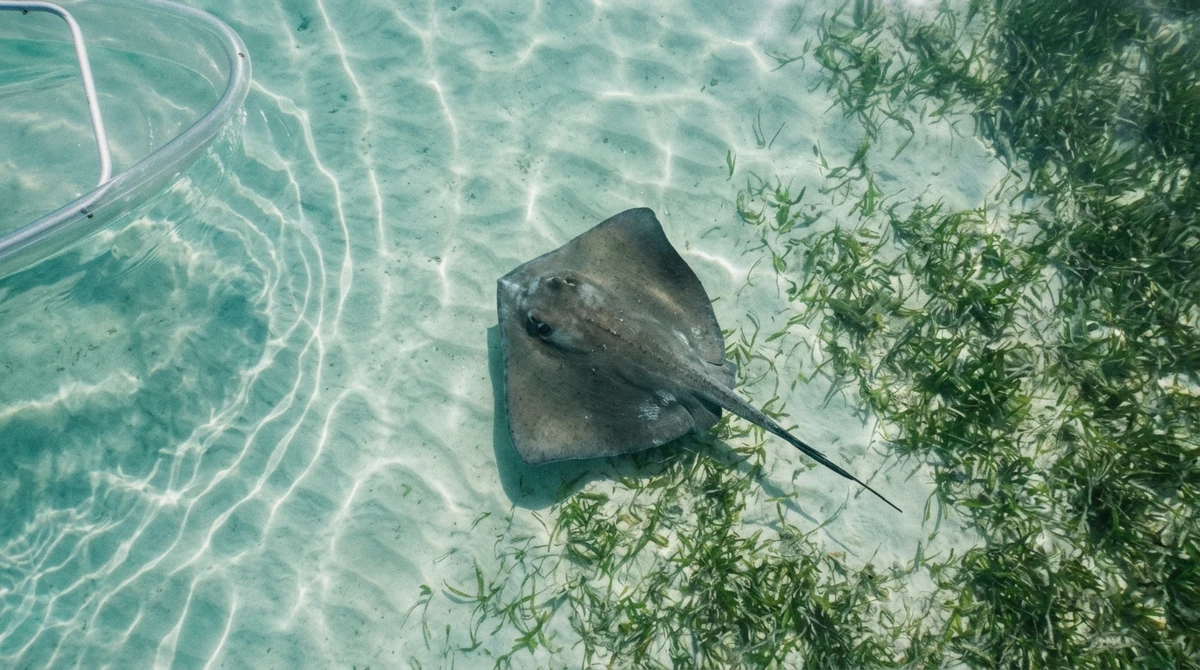
You will almost always see fish moving beneath your kayak on the Condado Lagoon, very often a heron or a pelican working the mangrove edge, and, on a good day, a ray gliding across the seagrass or a manatee surfacing to breathe. This protected estuary in the middle of San Juan is described by the San Juan Bay Estuary Program as the water body with the greatest aquatic biodiversity in the whole estuary system, and paddling it at eye level with the water is a genuinely different way to see that than reading about it. This guide covers what condado lagoon wildlife you can realistically expect, the law protecting the manatees you might meet, and which trip gives you the best honest shot at seeing any of it.
Quick answer
You will almost always see fish and wading birds on a Condado Lagoon paddle, often a ray or a turtle if you look down through a clear-bottom kayak, and, on a lucky day, an Antillean manatee surfacing near the mangroves. Nothing on the lagoon is ever guaranteed, but the reserve's calm, motor-free water and dense seagrass make it one of the more reliable easy-access wildlife paddles in San Juan.
Key takeaways
- Fish, herons, pelicans and iguanas are near-certain sightings on almost any paddle across the lagoon.
- Rays, turtles and fish are easiest to spot from a clear-bottom kayak nature tour, where you can actually look straight down.
- The Antillean manatee is protected by federal law, and it is illegal to feed, chase or touch one, sightings are a lucky-day bonus, never a promise.
- The lagoon's water stays calm because motorized vessels are banned across the reserve, which is a big part of why the wildlife stays put here.
- Want the honest breakdown of renting versus a guided tour for the best wildlife odds? see the Condado Lagoon kayak trips we compare first.
- The daytime water bike tour covers similar ground from a different vantage point if kayaking is not your thing.
What You Actually See From a Kayak
Sightings on the Condado Lagoon fall into rough tiers, from near-certain to lucky-day. None of these are guaranteed on any single trip, but the table below reflects what paddlers and guides on the lagoon report seeing regularly.
| Wildlife | Where on the lagoon | How likely |
|---|---|---|
| Fish (tarpon, pufferfish, small reef species) | Over the seagrass beds throughout the lagoon | Nearly every trip |
| Brown pelicans and herons | Along the mangrove edges | Nearly every trip |
| Iguanas | Basking on the banks near the mangroves | Most trips |
| Stingrays and eagle rays | Open seagrass meadows, best seen from a clear-bottom kayak | Regular but not every trip |
| Green and hawksbill sea turtles | Near the seagrass beds and mangrove fringe | Regular but not every trip |
| Crabs, starfish and sea cucumbers | Shallow water near the banks | Regular but not every trip |
| Magnificent frigatebirds and terns | Overhead, especially near the channel mouths | Regular but not every trip |
| Barracuda | Deeper stretches of the lagoon | Lucky-day sighting |
| Octopus | Tucked near rocks or mangrove roots | Lucky-day sighting |
| Antillean manatee | Near seagrass beds and the mangrove shoreline | Lucky-day sighting |
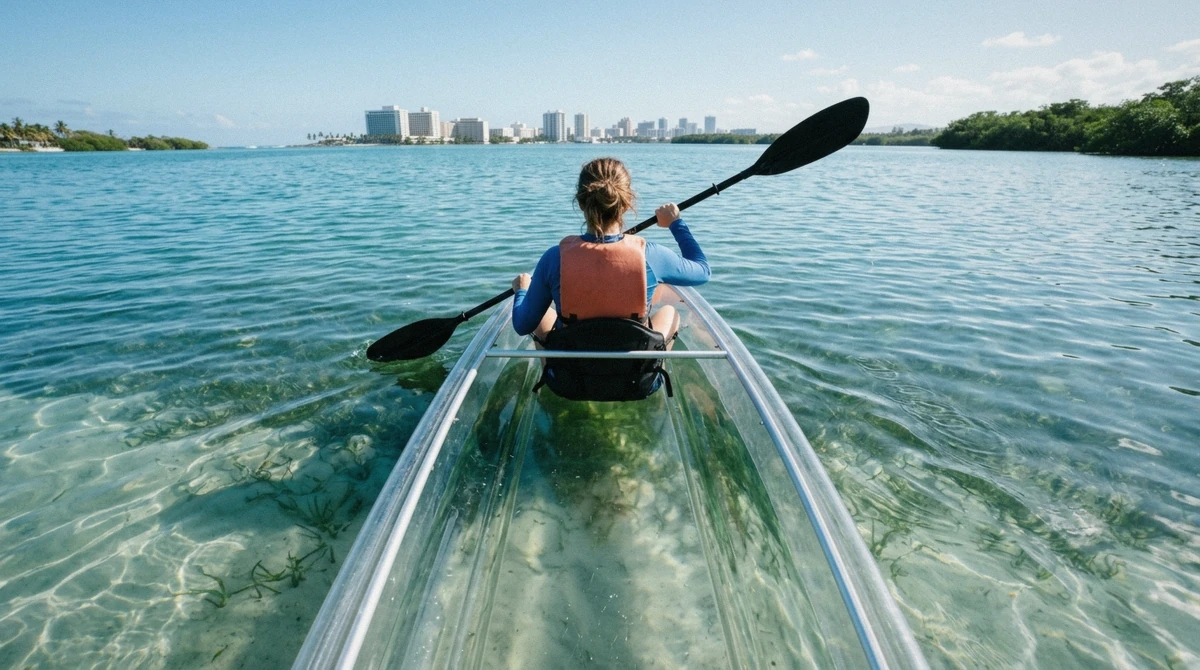
The single biggest factor in what you personally see is which way you are looking. A standard kayak or paddleboard puts the water beside you; a clear-bottom kayak puts it beneath you, which is why the guided clear-bottom kayak nature tour turns up more ray and fish sightings than a plain rental, even paddling the same stretch of water.
Manatees: the Honest Odds and the Law
The Antillean manatee, a subspecies of the West Indian manatee, feeds on the lagoon's seagrass, which is exactly why the reserve is a place they visit. Seeing one is a real possibility on the Condado Lagoon, but it is a lucky-day sighting, not something any honest guide will promise you before you launch.
What the law actually says
The Antillean manatee is federally protected under the Endangered Species Act and the Marine Mammal Protection Act of 1972. It is illegal to feed, harass, harm, pursue, hunt, wound, kill, annoy or molest a manatee, and federal, state and local officers can cite violators. There is no published numeric distance rule for paddlers specifically; the official standard is behavioral: if a manatee responds to your presence, you are too close, and you should move away to a distance that no longer changes its natural behavior.
NOAA's general marine-mammal viewing guidance, useful as a rule of thumb, is at least 50 yards.
A 2024 proposal, not a rule yet
In September 2024, the U.S. Fish and Wildlife Service proposed designating new critical habitat for West Indian manatee subspecies, including a large new acreage designation for the Antillean manatee in Puerto Rico, with the comment period later extended. It remains a proposal, not a final rule, and this site does not claim the Condado Lagoon itself is named in it. What is certain already is the existing federal protection above, which applies regardless of any habitat designation.
Never approach, chase or attempt to touch a manatee if you are lucky enough to see one. Hold your position, let it move at its own pace, and enjoy having seen one of Puerto Rico's most protected animals in the wild.
Turtles, Rays and the Fish Under the Hull
Green and hawksbill sea turtles are reported regularly on the lagoon, usually near the seagrass beds where they feed or resting close to the mangrove fringe. Stingrays and eagle rays are some of the most photographed sightings on a clear-bottom paddle, gliding just beneath the surface over open sand and seagrass patches.
Fish are the most consistent sighting of all: tarpon moving in loose groups, barracuda holding still in deeper water, and smaller reef species like pufferfish weaving through the seagrass. Starfish and sea cucumbers turn up in shallower water near the banks; if you spot a starfish, leave it in the water, even a few seconds out of the water can kill one.
Birds, Iguanas and the Mangrove Edge
The mangrove-lined banks of the lagoon are where most of the bird activity concentrates. Brown pelicans dive for fish close to shore, herons stand motionless in the shallows waiting for the same, and magnificent frigatebirds circle high overhead, especially near where the lagoon connects to open water at the channel mouths. Terns work the same airspace, dropping in fast for small fish.
Iguanas are a near-daytime constant, basking on rocks and mangrove roots along the banks, especially in the warmer midday hours. None of these sightings require luck the way a manatee does, they are simply part of paddling past the mangrove edge on almost any trip.
The mangrove roots themselves are worth a second look, not just the animals perched on them. Small crabs pick their way across the exposed roots at low points in the shoreline, and juvenile fish flicker in the shaded water underneath, sheltering from the larger fish and birds working the open lagoon just a few feet away.
Why the Lagoon Holds This Much Life
Four mangrove species grow around the reserve, red, white, black and buttonwood, and together they form the nursery habitat that much of this wildlife depends on: young fish shelter in the mangrove roots before moving out to the open seagrass beds as they mature.
Depth is part of the answer too. The lagoon averages about 10 feet deep and only reaches 36 feet at its deepest point, so sunlight reaches the bottom across most of it and the seagrass that feeds the manatees and turtles can grow almost everywhere.
The reserve's 200-acre footprint runs along Avenida Ashford and Avenida Baldorioty de Castro, connecting to the Atlantic through the El Boquerón channel and to San Juan Bay through the San Antonio Channel. That dual connection, ocean on one side and bay on the other, is part of why the lagoon supports such a wide mix of species: it draws in marine life from two different directions rather than sitting as a single closed pond.
The lagoon is a protected reserve where motorboats are banned, which is why the water stays flat and undisturbed enough for that ecosystem to function close to a dense, busy city neighborhood. Across the wider San Juan Bay Estuary system that the lagoon belongs to, 124 fish species have been recorded, and 221 bird species have been logged in San Juan on eBird; a separate estuary-wide census documented 91 species, including 10 endemic and 25 migratory, across 16 censuses in 13 natural areas. These figures describe the whole estuary system, not the lagoon alone, but they explain why the San Juan Bay Estuary Program calls the Condado Lagoon the water body with the greatest aquatic biodiversity in that system.
How to Watch Without Breaking the Rules
Law 112-2013, which created the reserve, bans fishing and the capture of species across the lagoon, alongside the ban on motorized vessels. Paddle sports like kayaking sit inside the law's expressly compatible recreational activities, alongside snorkeling and sailing.
- Never touch, chase or attempt to feed any wildlife, including manatees, turtles and rays
- If a manatee reacts to your presence, back away until it settles, that is the real distance rule
- Keep noise down near the mangrove edge, most birds and manatees are easiest to see when they are not startled
- Never lift a starfish out of the water, even briefly
- Use reef-safe sunscreen before you launch, standard chemical sunscreen is not allowed in the protected reserve
- Do not paddle into any roped-off sanctuary or no-entry zone
- Leave the seagrass beds undisturbed, that is what the fish, turtles and manatees are actually there for
- Report an injured or distressed animal to your guide or DRNA rather than approaching it yourself
Which Trips Give the Best Look
Not every way onto the lagoon gives you the same wildlife odds. Looking straight down through clear water beats looking sideways over a normal kayak's gunwale, and a naturalist guide beats going it alone.
| Trip | Price | Why it helps for wildlife |
|---|---|---|
| Clear-bottom kayak nature tour | $49 | A transparent hull plus a naturalist guide who knows where rays, fish and turtles tend to gather |
| Daytime water bike tour | $59 | An elevated seat above the water gives a wider view of the surface, good for spotting birds and surfacing manatees |
| Double kayak rental | $65 | No naturalist, but a slow, quiet pace across the seagrass gives patient paddlers a real shot at sightings |
If wildlife is the entire reason for your trip, the clear-bottom kayak nature tour is the strongest single choice on this site, since a guide's eyes matter almost as much as the clear hull itself. For the rental-versus-guide math in full, see the Condado Lagoon kayak trips we compare side by side. Last verified: August 2026.
No trip on the Condado Lagoon can promise you a manatee or a turtle, and any guide who tells you otherwise is overselling. What the reserve can promise is a genuinely alive stretch of water, fish, birds and the occasional ray or turtle, right in the middle of San Juan.
Frequently Asked Questions
What animals live in the Condado Lagoon?
Fish, brown pelicans, herons, iguanas, stingrays, sea turtles, crabs, starfish and, occasionally, the Antillean manatee all use the reserve. Fish and birds are near-certain sightings; manatees are a lucky-day bonus.
Will I see a manatee kayaking in Condado Lagoon?
Maybe, but never guaranteed. Manatees feed on the lagoon's seagrass and are seen regularly enough to be a realistic hope, not a promise. See the table above for the honest odds on other wildlife too.
How close can you get to a manatee in Puerto Rico?
There is no published numeric distance rule for paddlers; the standard is behavioral: if the manatee reacts to you, back away. NOAA's general guidance for marine mammals is at least 50 yards as a rule of thumb.
Are there sea turtles in the Condado Lagoon?
Yes, green and hawksbill sea turtles are reported regularly near the seagrass beds and mangrove fringe, most easily spotted from a clear-bottom kayak nature tour.
Is it safe to kayak near manatees?
Yes, if you follow the rules: never approach, touch or feed one, and back off if it reacts to your presence. It is federally illegal to harass or pursue a manatee under the Marine Mammal Protection Act of 1972.
What is the best tour for seeing wildlife on the lagoon?
The clear-bottom kayak nature tour at $49 gives the best combined odds, a transparent hull to look straight down through and a naturalist guide who knows where sightings tend to happen.
Do you need a permit to view wildlife on the Condado Lagoon?
No permit is needed to paddle and view wildlife as a visitor. Fishing and the capture of species are banned under Law 112-2013, and commercial operators running trips need a DRNA concession, but simply paddling and watching requires nothing extra.